
Tools, implements, cutlery, spoons and… (chapter 82): which countries import it
HS Chapter 82 covers hand tools, cutlery, blades and similar implements made of base metal. Global imports exceed USD 40 billion annually, led by the…
Published on 27 September 2026Updated on 27 September 2026
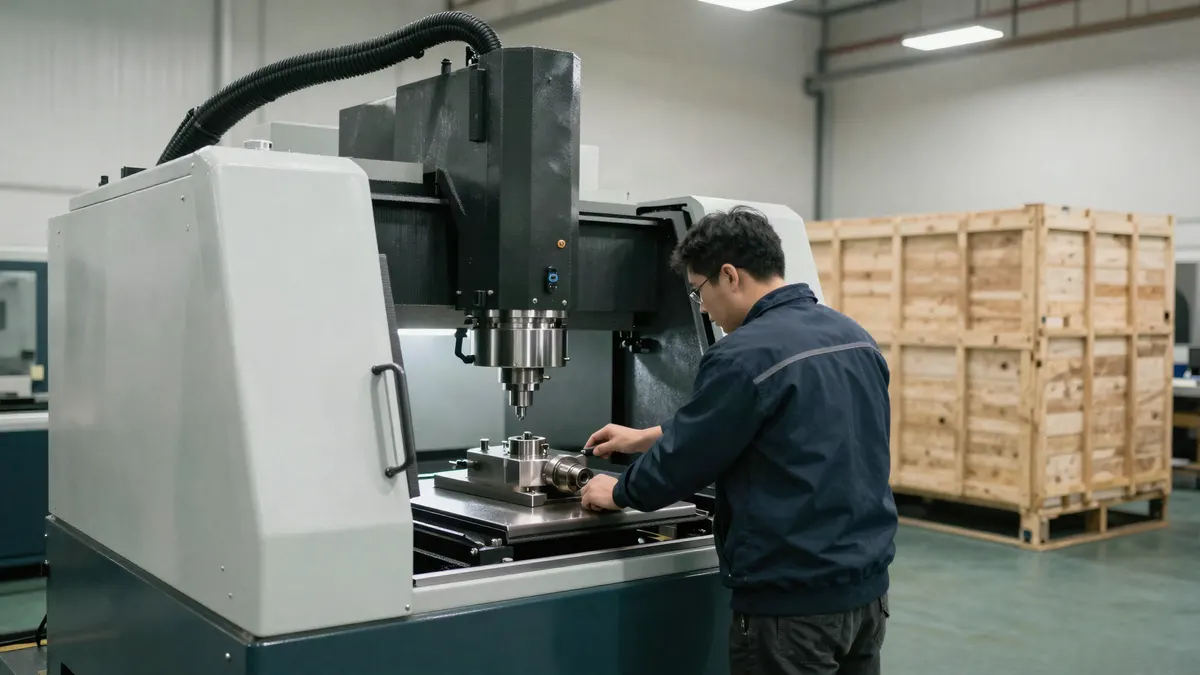
HS Chapter 82 covers hand tools, cutlery, blades and similar implements made of base metal. Global imports exceed USD 40 billion annually, led by the United States, Germany and Iraq. Spain exported USD 1.6 billion in 2025. Success depends on understanding which heading applies to your product, verifying tariffs by destination, and confirming safety and marking requirements.
Fact sheet
- Code
- 82
- Sector
- Industry and Machinery
Main importing markets
USD · 2025| Country | Imports (USD) |
|---|---|
| United States | 11,236,635,601 |
| Germany | 7,071,970,318 |
| Iraq | 3,002,861,873 |
| France | 2,835,475,020 |
| China | 2,643,536,940 |
| Mexico | 2,608,048,297 |
| Canada | 2,240,578,057 |
| Poland | 2,215,555,744 |
| Italy | 2,128,238,361 |
| United Kingdom | 2,094,064,171 |
| Netherlands | 2,046,671,930 |
| India | 1,591,080,298 |
| Spain | 1,587,865,907 |
| Japan | 1,431,362,499 |
| Australia | 1,189,326,755 |
Imports declared by each country from the world. Countries report with a delay: the period is the latest with consolidated data.
Source: UN ComtradeData for 2025Verified on 27 September 2026
Headings in this chapter
- Tools, hand; spades, shovels, mattocks, picks, hoes, forks, rakes; axes, bill hooks etc; secateurs and pruners of any kind; scythes, sickles, hay knives, hedge shears, timber wedges and other tools used in agriculture, horticulture, forestryHeading 8201
- Tools, hand; saws and blades for saws of all kinds (including slitting, slotting or toothless saw blades)Heading 8202
- Tools, hand; files, rasps, pliers (including cutting pliers), pincers, tweezers, metal cutting shears, pipe cutters, bolt croppers, perforating punches and similarHeading 8203
- Tools, hand; hand-operated spanners and wrenches (including torque meter wrenches but not including tap wrenches), interchangeable spanner sockets, with or without handlesHeading 8204
- Tools, hand; (including glaziers' diamonds) n.e.c.; blow lamps; vices, clamps etc, other than accessories for and parts of, machine-tools or water-jet cutting machines; anvils; portable forges; hand or pedal operated grinding wheels with frameworksHeading 8205
- Tools, hand; two or more of heading no. 8202 to 8205, put up in sets for retail saleHeading 8206
- Tools, interchangeable; for hand tools, whether or not power-operated, or for machine tools (pressing, stamping, punching, drilling etc), including dies for drawing or extruding metal, and rock drilling or earth boring toolsHeading 8207
- Knives and cutting blades, for machines or for mechanical appliancesHeading 8208
- Tools; plates, sticks, tips and the like for tools, unmounted, of sintered metal carbides or cermetsHeading 8209
- Tools; hand-operated mechanical appliances, weighing 10kg or less, used in the preparation, conditioning or serving of food or drinkHeading 8210
- Knives; with cutting blades, serrated or not (including pruning knives), other than knives of heading no. 8208, and blades thereforeHeading 8211
- Razors and razor blades; (including razor blade blanks in strips)Heading 8212
- Scissors; tailors' shears and similar shears, and blades thereforeHeading 8213
- Cutlery; other articles, (e.g. hair clippers, butchers' or kitchen cleavers, choppers and mincing knives, paper knives), manicure or pedicure sets and instruments (including nail files)Heading 8214
- Cutlery; spoons, forks, ladles, skimmers, cake-servers, fish-knives, butter knives, sugar tongs and similar kitchen or tablewareHeading 8215
Trade fairs in this sector
- Advanced Factories
- bauma
- BIEMH – Bienal Internacional de Máquina‑Herramienta
- EMO (Exposition Mondiale de la Machine Outil)
- Hannover Messe
- interpack – PROCESSING & PACKAGING
What you need to know before you export
Chapter 82 is organized into 16 headings, each covering a specific type of tool or implement. Your product's classification determines the tariff applied by each importing country, so the first step is identifying the correct heading. The chapter list included in this page shows all headings with their scope; if your product spans multiple headings, check each one carefully.
Tariffs are not uniform: they depend on the destination country, the specific HS subheading (up to ten digits), and any preferential trade agreement in force. For a company exporting from Spain, tariffs within the EU are zero; tariffs to non-EU countries vary. Check the applicable tariff in Access2Markets by entering your destination, your eight-digit HS code, and the incoterm you plan to use.
Safety and packaging requirements also vary by destination. The United States, for example, has specific rules for certain tools under CPSC jurisdiction; the EU has harmonized standards for cutting tools and hand tools under the Machinery Directive and product-specific standards. Before you quote, verify which standards apply to your product and destination.
Spain is a significant player in this chapter: as the 13th largest importer globally in 2025, it is also a production hub. German and Italian competitors are strong in machine tools and precision instruments. Understanding local competition in your target market helps you position your product and pricing.
Questions exporters ask
How do I know which HS heading my product falls under?
Start with the list of 16 headings in this chapter. Most hand tools are classified by their function and design: saws in 8202, pliers and similar in 8203, spanners in 8204. If your product is a combination or includes interchangeable parts, check headings 8206 and 8207. If you are unsure, your customs broker or your product's technical documentation should clarify it. Once you have the six-digit heading, your tariff classification software or your destination country's tariff authority can give you the full eight- or ten-digit code for duty calculation.
What tariff will I pay exporting to my target market?
It depends on the destination country and your product's eight-digit HS code. Within the EU, tariffs on Chapter 82 products are zero. Outside the EU, tariffs range from zero to more than 20 percent depending on the country and the product. Use Access2Markets (for EU exporters) to check: enter your destination, your HS code, and your trade agreement. If you export from outside the EU, check your country's trade authority or your destination's tariff schedule directly.
What safety standards apply to my tools or cutlery?
Safety requirements depend on the product type and the destination market. In the EU, hand tools must comply with relevant harmonized standards under the Machinery Directive and product-specific standards (e.g., EN standards for cutting tools). In the United States, cutting implements intended for children or food use fall under CPSC rules. In other markets, local standards may apply. Before you export, identify which standards your product must meet: check your destination country's import authority or consult your importer about their local requirements. Your product's technical file and test reports should support compliance.
Are there specific markings or labeling requirements?
Yes. Most markets require that hand tools and cutlery be marked with the manufacturer's name or trademark, the country of origin, and sometimes a CE mark (in the EU) or equivalent. Some products must carry usage warnings or instructions. Cutlery may have specific marking rules depending on the material and intended use. Verify the exact marking and labeling rules for your destination before production. Your importer or your destination's customs authority can confirm what applies to your product.
Which are the main markets for Chapter 82 products?
The largest importing countries in 2025 were the United States (USD 11.2 billion), Germany (USD 7.1 billion), Iraq (USD 3.0 billion), France (USD 2.8 billion), and China (USD 2.6 billion). Within Europe, Germany, France, Italy, Poland and the Netherlands are major importers. The United States and Iraq are particularly strong markets for industrial hand tools and machinery cutlery. Market structure varies by product: some headings are dominated by industrial tool imports, others by tableware and kitchen cutlery. Research which heading matches your product to identify the most relevant markets for your offering.
Bring this analysis to your product
Create your free account: Exporta.ai reads your website, detects your HS code and tells you which markets to export to, with official data.