
Iron or steel articles (chapter 73): which countries import it
Chapter 73 groups iron and steel articles: from structural components and tubes to fasteners, chains and domestic appliances. The United States leads…
Published on 27 September 2026Updated on 27 September 2026
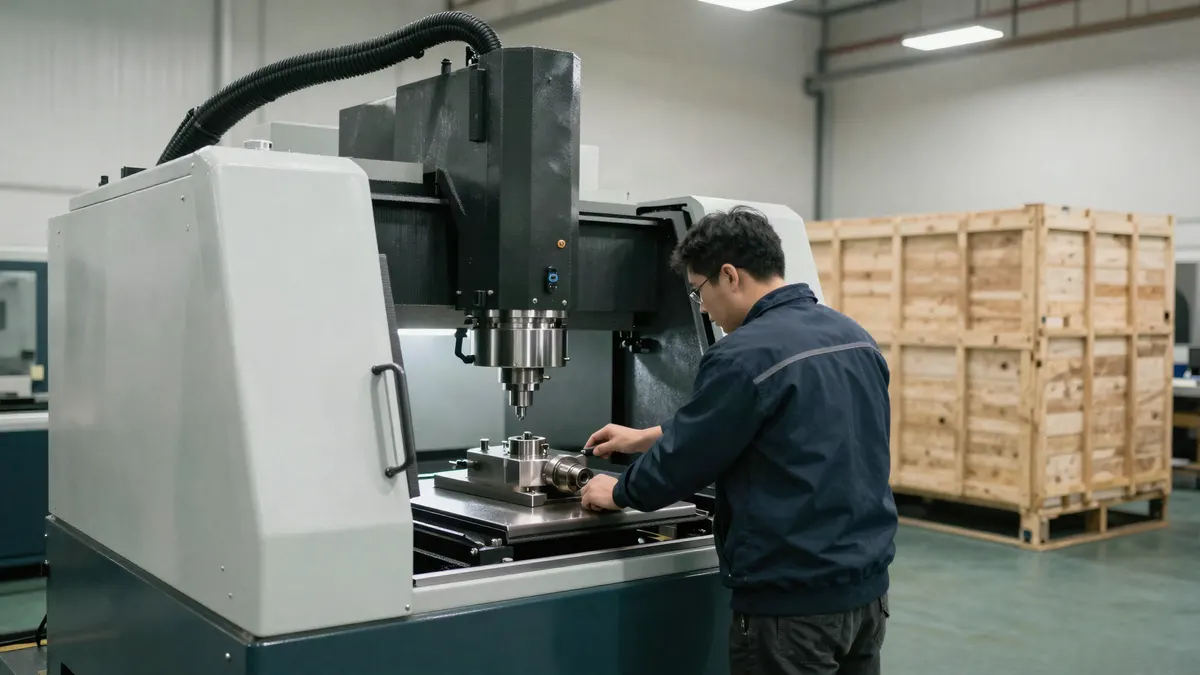
Chapter 73 groups iron and steel articles: from structural components and tubes to fasteners, chains and domestic appliances. The United States leads global imports at USD 44 billion, followed by Germany and France. Understanding tariff headings and destination market rules determines your export strategy.
Fact sheet
- Code
- 73
- Sector
- Industry and Machinery
Main importing markets
USD · 2025| Country | Imports (USD) |
|---|---|
| United States | 44,203,634,843 |
| Germany | 29,455,325,380 |
| France | 14,312,673,139 |
| Canada | 11,497,558,070 |
| United Kingdom | 11,457,210,969 |
| Mexico | 10,422,586,532 |
| Poland | 10,162,251,571 |
| Thailand | 9,303,363,773 |
| Netherlands | 9,245,096,458 |
| Italy | 9,150,211,089 |
| China | 9,088,864,819 |
| South Korea | 8,036,471,823 |
| Saudi Arabia | 8,007,265,955 |
| Spain | 7,693,293,453 |
| Japan | 7,228,846,252 |
Imports declared by each country from the world. Countries report with a delay: the period is the latest with consolidated data.
Source: UN ComtradeData for 2025Verified on 27 September 2026
Headings in this chapter
- Iron or steel sheet piling, whether or not drilled, punched or made from assembled elements; welded angles, shapes and sections, of iron or steelHeading 7301
- Railway or tramway track constructions of iron or steel; rails, check and track rails, switch blades, crossing frogs, point rods, sleepers, fish-plates, chair wedges, sole plates, bedplates, ties and the likeHeading 7302
- Tubes, pipes and hollow profiles, of cast ironHeading 7303
- Tubes, pipes and hollow profiles, seamless, of iron (other than cast iron) or steelHeading 7304
- Iron or steel (excluding cast iron); tubes and pipes (e.g. welded, riveted or similarly closed), having circular cross-sections, external diameter of which exceeds 406.4mm, not seamlessHeading 7305
- Iron or steel (excluding cast iron); tubes, pipes and hollow profiles (not seamless), n.e.c. in chapter 73Heading 7306
- Tube or pipe fittings (e.g. couplings, elbows, sleeves), of iron or steelHeading 7307
- Structures of iron or steel and parts thereof; plates, rods, angles, shapes, sections, tubes and the like, prepared for use in structuresHeading 7308
- Reservoirs, tanks, vats and similar containers; for any material (excluding compressed or liquefied gas), of iron or steel, capacity exceeding 300l, whether or not lined or heat insulatedHeading 7309
- Tanks, casks, drums, cans, boxes and similar containers, for any material (excluding compressed or liquefied gas), of iron or steel, capacity not exceeding 300l, whether or not lined or heat-insulatedHeading 7310
- Containers for compressed or liquefied gas, of iron or steelHeading 7311
- Stranded wire, ropes, cables, plaited bands, slings and the like, of iron or steel, not electrically insulatedHeading 7312
- Barbed wire of iron or steel; twisted hoop or single flat wire, barbed or not and loosely twisted double wire, of a kind used for fencing, of iron or steelHeading 7313
- Cloth (including endless bands), grill, netting and fencing, of iron or steel wire; expanded metal of iron or steelHeading 7314
- Chain and parts thereof, of iron or steelHeading 7315
- Anchors, grapnels and parts thereof, of iron or steelHeading 7316
- Nails, tacks, drawing pins, corrugated nails, staples (not those of heading no. 8305) and the like, of iron or steel, with heads of other material or not, but excluding articles with heads of copperHeading 7317
- Screws, bolts, nuts, coach screws, screw hooks, rivets, cotters, cotter-pins, washers (including spring washers) and similar articles, of iron or steelHeading 7318
- Sewing and knitting needles, bodkins, crochet hooks, embroidery stilettos and similar articles, for use in the hand, of iron or steel; safety pins and other pins of iron or steel, not elsewhere specified or includedHeading 7319
- Springs and leaves for springs, of iron or steelHeading 7320
- Stoves, ranges, grates, cookers (those with subsidiary boilers for central heating), barbecues, braziers, gas-rings, plate warmers and similar non-electric domestic appliances and parts, of iron or steelHeading 7321
- Radiators for central heating, not electrically heated and parts thereof, of iron or steel; air heaters, hot air distributors not electrically heated, with motor fan or blowerHeading 7322
- Table, kitchen, other household articles and parts, of iron or steel; iron or steel wool; pot scourers and scouring or polishing pads, gloves and the like, of iron or steelHeading 7323
- Sanitary ware and parts thereof, of iron or steelHeading 7324
- Iron or steel; cast articlesHeading 7325
- Iron or steel; articles, n.e.c. in chapter 73Heading 7326
Trade fairs in this sector
- Advanced Factories
- bauma
- BIEMH – Bienal Internacional de Máquina‑Herramienta
- EMO (Exposition Mondiale de la Machine Outil)
- Hannover Messe
- interpack – PROCESSING & PACKAGING
What you need to know to export iron and steel articles
Chapter 73 covers 27 different product headings. Each heading has its own tariff rate, origin rules and, often, specific requirements. A fastener exported to France faces different rules than the same fastener to the United States. The first step is to identify which heading your product falls under: the chapter list shows all of them.
Tariff rates vary by heading and by destination market. Spain has preferential agreements with the EU and with countries under the World Trade Organization framework, but rates differ. Check Access2Markets or your customs authority's tariff tool to confirm the rate that applies to your product, destination and the agreement in force.
Origin rules matter. Many steel articles qualify for preferential rates only if they meet local content or processing thresholds. For exports from Spain within the EU, rules of origin are governed by EU law. For shipments outside the EU, the agreement with each country sets the threshold. Verify this before quoting, as it affects your cost.
Quality and technical standards depend on the heading and the destination. Structural steel, tubes and fasteners often require certification or third-party inspection. Domestic appliances and sanitary ware face safety and materials standards. Ask your buyer what standard they require—EN, ISO, national or other—and confirm your production meets it before committing.
Frequently asked questions
How do I know which heading my product belongs to?
Each product has a specific 4-digit heading within chapter 73. The chapter list on this page shows all 27 headings and their scope. If you are unsure, describe your product to your freight forwarder or customs broker: they can classify it. Once classified, you will know which tariff rate, origin rules and standards apply.
Do I need a certificate of origin for iron and steel exports from Spain?
Within the EU, a certificate of origin is not required for intra-EU trade: goods move under common customs rules. For exports outside the EU, the answer depends on the destination country and the trade agreement in force between Spain and that country. Some agreements require a document to claim preferential rates; others do not. Your customs broker or your chamber of commerce can confirm the requirement for each destination.
What market should I target first?
The United States is the world's largest importer of chapter 73 articles at USD 44 billion annually, but it also has the strictest requirements and longest lead times. Germany and France together import USD 44 billion and are closer to Spain, with simpler logistics and faster payment terms. Your choice depends on your product, your production capacity and your risk tolerance. Start where your product has the strongest fit and where you can manage the compliance burden.
Are there trade fairs where I can find buyers for these products?
Yes. Hannover Messe and EMO are major industrial machinery fairs where steel components, structures and machinery are shown. Bauma focuses on construction equipment and machinery. Advanced Factories covers industrial automation and manufacturing. These fairs attract international buyers and are opportunities to validate market interest before investing in export infrastructure.
Bring this analysis to your product
Create your free account: Exporta.ai reads your website, detects your HS code and tells you which markets to export to, with official data.