
Iron and steel (chapter 72): which countries import it
Chapter 72 covers iron and steel in all forms: raw materials, semi-finished products, flat-rolled sheets, bars, and wire. Global imports exceed USD 255…
Published on 27 September 2026Updated on 27 September 2026
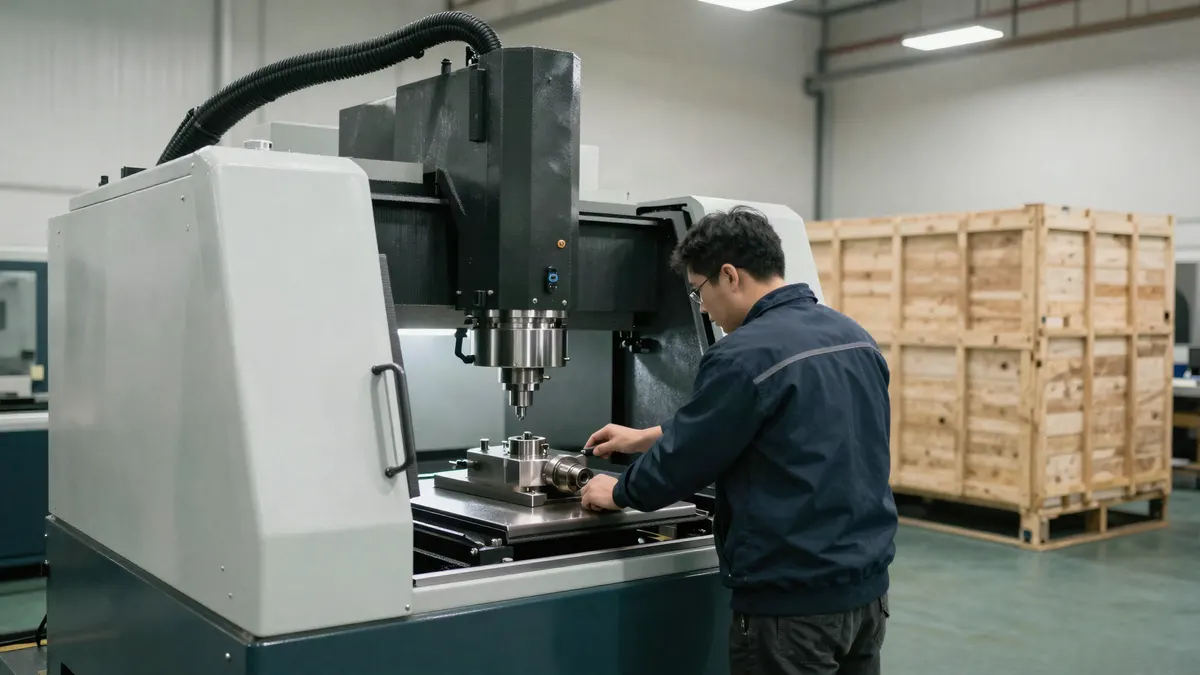
Chapter 72 covers iron and steel in all forms: raw materials, semi-finished products, flat-rolled sheets, bars, and wire. Global imports exceed USD 255 billion annually. Spain ranks among top importers globally. Understanding tariffs, product classification, and destination requirements is essential before export.
Fact sheet
- Code
- 72
- Sector
- Industry and Machinery
Main importing markets
USD · 2024| Country | Imports (USD) |
|---|---|
| China | 31,920,379,900 |
| Germany | 27,419,591,290 |
| United States | 27,124,314,742 |
| Italy | 24,137,641,723 |
| Türkiye | 22,205,564,007 |
| India | 16,460,115,020 |
| Mexico | 16,362,694,975 |
| Poland | 12,381,654,445 |
| France | 12,248,035,124 |
| Thailand | 11,864,727,813 |
| South Korea | 11,834,663,055 |
| Spain | 11,110,870,488 |
| Indonesia | 9,527,770,545 |
| Netherlands | 9,453,777,062 |
| Belgium | 7,879,973,733 |
Imports declared by each country from the world. Countries report with a delay: the period is the latest with consolidated data.
Source: UN ComtradeData for 2024Verified on 27 September 2026
Headings in this chapter
- Pig iron and spiegeleisen in pigs, blocks or other primary formsHeading 7201
- Ferro-alloysHeading 7202
- Ferrous products obtained by direct reduction of iron ore and other spongy ferrous products, in lumps, pellets or the like; iron having a minimum purity of 99.94%, in lumps, pellets or similar formsHeading 7203
- Ferrous waste and scrap; remelting scrap ingots of iron or steelHeading 7204
- Granules and powders, of pig iron, spiegeleisen, iron or steelHeading 7205
- Iron and non-alloy steel in ingots or other primary forms (excluding iron of heading no. 7203)Heading 7206
- Iron or non-alloy steel; semi-finished products thereofHeading 7207
- Iron or non-alloy steel; flat-rolled products of a width of 600mm or more, hot-rolled, not clad, plated or coatedHeading 7208
- Iron or non-alloy steel; flat-rolled products, width 600mm or more, cold-rolled (cold-reduced), not clad, plated or coatedHeading 7209
- Iron or non-alloy steel; flat-rolled products, width 600mm or more, clad, plated or coatedHeading 7210
- Iron or non-alloy steel; flat-rolled products, width less than 600mm, not clad, plated or coatedHeading 7211
- Iron or non-alloy steel; flat-rolled products, width less than 600mm, clad, plated or coatedHeading 7212
- Iron or non-alloy steel; bars and rods, hot-rolled, in irregularly wound coilsHeading 7213
- Iron or non-alloy steel; bars and rods, not further worked than forged, hot-rolled, hot drawn or hot-extruded, but including those twisted after rollingHeading 7214
- Iron or non-alloy steel; bars and rods, n.e.c. in chapter 72Heading 7215
- Iron or non-alloy steel, angles, shapes and sectionsHeading 7216
- Wire of iron or non-alloy steelHeading 7217
- Stainless steel in ingots or other primary forms; semi-finished products of stainless steelHeading 7218
- Stainless steel; flat-rolled products of width of 600mm or moreHeading 7219
- Stainless steel; flat-rolled products of width less than 600mmHeading 7220
- Stainless steel bars and rods, hot-rolled, in irregularly wound coilsHeading 7221
- Stainless steel bars and rods, angles, shapes and sectionsHeading 7222
- Stainless steel wireHeading 7223
- Alloy steel in ingots or other primary forms, semi-finished products of other alloy steelHeading 7224
- Alloy steel flat-rolled products, of a width 600mm or moreHeading 7225
- Alloy steel flat-rolled products, of a width of less than 600mmHeading 7226
- Steel, alloy; bars and rods, hot-rolled, in irregularly wound coilsHeading 7227
- Alloy steel bars, rods, shapes and sections; hollow drill bars and rods, of alloy or non-alloy steelHeading 7228
- Wire of other alloy steelHeading 7229
Trade fairs in this sector
- Advanced Factories
- bauma
- BIEMH – Bienal Internacional de Máquina‑Herramienta
- EMO (Exposition Mondiale de la Machine Outil)
- Hannover Messe
- interpack – PROCESSING & PACKAGING
What you need to know to export iron and steel
Iron and steel exports depend entirely on the specific product. Chapter 72 contains 27 headings covering everything from pig iron to stainless steel wire. Each heading carries its own tariff rate, origin rules, and destination requirements. Your first step is to identify the exact HS code of what you plan to export.
Tariffs vary by destination country and by the trade agreement in force. The European Union has preferential rates with many countries, but these are not automatic: they depend on proving EU origin and meeting rules of origin thresholds. Access2Markets shows the applicable tariff for each destination once you know your HS code.
Spanish steel exports compete in markets already served by Germany, Italy, and Poland. Differentiation comes from product quality, delivery terms, and compliance certifications. Certifications required vary by destination and end use; they are not the same for structural steel, automotive components, or machinery parts.
Lead times for iron and steel exports are typically 4–8 weeks from order to shipment, depending on whether you stock finished product or produce to order. Bulk shipments move by sea; smaller volumes may go by truck to European neighbors. Incoterms and payment terms are negotiated per buyer.
Trade fairs in this sector—Hannover Messe, bauma, EMO—bring together buyers from construction, automotive, and machinery industries. These are B2B events where specifications, minimum order quantities, and long-term supply agreements are discussed.
Questions about exporting iron and steel from Spain
How do I know the tariff my buyer will pay when I export to a specific country?
The tariff depends on three things: your exact HS code (which you find by matching your product to one of the 27 headings in Chapter 72), the destination country, and the trade agreement in force between that country and the EU. Access2Markets (access2markets.ec.europa.eu) shows you the rate once you enter the code and country. Rates change annually, so check it before you quote.
Do I need certificates of origin for steel exports from Spain?
It depends on the destination country and whether your buyer needs to claim a preferential tariff. If the buyer wants to pay the EU rate instead of the MFN (most favored nation) rate, you must provide a certificate of origin proving your product is EU-made. The process and forms vary by destination; your chamber of commerce or a customs broker can issue the certificate once you provide the commercial documents.
What are rules of origin and why do they matter?
Rules of origin determine whether your product qualifies as Spanish or EU-made for tariff purposes. For steel, the rule typically requires that a certain percentage of the value comes from EU materials or that substantial transformation happens in the EU. If you import raw materials from outside the EU and process them in Spain, you must track their cost to prove the threshold is met. If you don't, your buyer pays the non-preferential tariff, which is often much higher.
Which markets import the most steel from Europe?
In 2024, the largest importers globally were China (USD 31.9 billion), Germany (USD 27.4 billion), and the United States (USD 27.1 billion). For Spanish exporters, the EU market—especially Germany, Italy, and France—remains the easiest entry because there are no tariffs or origin complexity. Non-EU markets require more planning around tariffs and payment terms, but they may offer higher margins if you can meet their specifications.
What payment terms should I offer for steel exports?
Payment terms depend on the buyer's size and your credit risk tolerance. Within Europe, 30–60 days net invoice is standard. To non-EU buyers you don't know, consider requiring prepayment or a letter of credit. Large buyers may demand 90–120 days net. Always include a currency clause in the contract to protect yourself against exchange rate swings, especially if you quote in euros but the buyer's revenue is in another currency.
Bring this analysis to your product
Create your free account: Exporta.ai reads your website, detects your HS code and tells you which markets to export to, with official data.