
Nickel and articles thereof (chapter 75): which countries import it
Chapter 75 groups nickel products from raw mattes and unwrought metal to refined articles like wire, tubes and foil. Global imports exceeded USD 31…
Published on 27 September 2026Updated on 27 September 2026
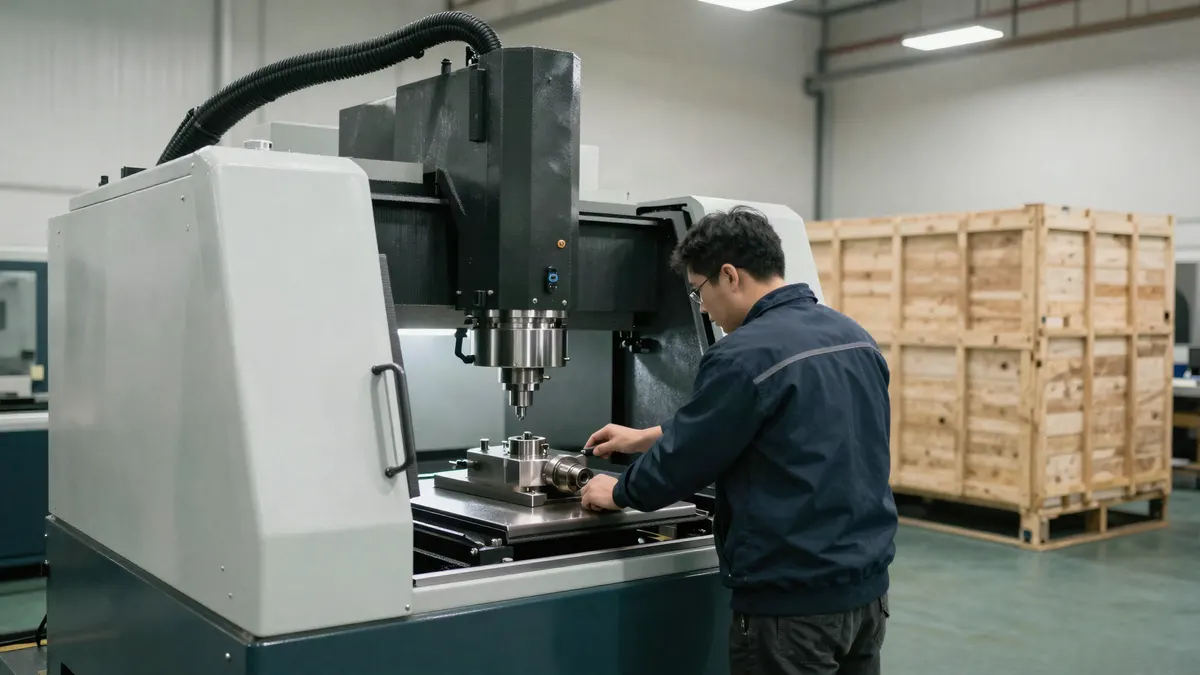
Chapter 75 groups nickel products from raw mattes and unwrought metal to refined articles like wire, tubes and foil. Global imports exceeded USD 31 billion in 2024, concentrated in China, the US and Japan. Tariffs and entry requirements vary by destination and product form: check them before quoting.
Fact sheet
- Code
- 75
- Sector
- Industry and Machinery
Main importing markets
USD · 2024| Country | Imports (USD) |
|---|---|
| China | 10,602,844,686 |
| United States | 3,371,058,639 |
| Japan | 3,154,177,316 |
| Germany | 2,008,936,125 |
| United Kingdom | 1,774,720,072 |
| Norway | 1,760,294,737 |
| Singapore | 1,694,757,957 |
| France | 1,641,626,727 |
| South Korea | 1,305,729,743 |
| India | 1,175,089,968 |
| Italy | 1,131,921,916 |
| Finland | 829,796,358 |
| Austria | 703,512,680 |
| Netherlands | 675,091,263 |
| Canada | 663,112,356 |
Imports declared by each country from the world. Countries report with a delay: the period is the latest with consolidated data.
Source: UN ComtradeData for 2024Verified on 27 September 2026
Headings in this chapter
- Nickel mattes; nickel oxide sinters and other intermediate products of nickel metallurgyHeading 7501
- Nickel; unwroughtHeading 7502
- Nickel; waste and scrapHeading 7503
- Nickel; powders and flakesHeading 7504
- Nickel; bars, rods, profiles and wireHeading 7505
- Nickel; plates, sheets, strip and foilHeading 7506
- Nickel; tubes, pipes and tube or pipe fittings (e.g. couplings, elbows, sleeves)Heading 7507
- Nickel; articles thereof n.e.c. in chapter 75Heading 7508
Trade fairs in this sector
- Advanced Factories
- bauma
- BIEMH – Bienal Internacional de Máquina‑Herramienta
- EMO (Exposition Mondiale de la Machine Outil)
- Hannover Messe
- interpack – PROCESSING & PACKAGING
What you need to know to export nickel products
Chapter 75 splits into eight headings, each covering a different form of nickel or nickel article. The eight headings move from raw material (mattes and oxides, heading 7501) through unwrought nickel (7502) to finished shapes: bars, rods and wire (7505); plates and foil (7506); tubes and fittings (7507); and other articles (7508). Waste and scrap are separate (7503), as are powders and flakes (7504).
Your first step is to identify which heading matches your product. The heading determines the tariff code, which in turn sets the duty rate for each destination market. A nickel rod exported from Spain to Germany faces a different duty than the same rod to China or the United States.
Tariffs are not fixed: they depend on the destination market, any active trade agreement, and the specific subheading of your product. Access2Markets lets you enter the HS code and the destination to see the applicable rate, any quotas, and any non-tariff barriers. For exports from Spain within the EU, TARIC shows the consolidated rate.
Beyond tariffs, check whether your destination market requires product certification, testing reports, or documentation tied to the nickel content, origin, or end use. These requirements vary widely and are not always published online: contacting the importer or a trade body in the destination is often the only way to confirm them.
Market concentration matters: China, the US and Japan account for nearly half of global imports. But smaller markets like Norway, Singapore and South Korea are also significant buyers. Review the import data by destination to spot opportunities and to understand competitive pressure in each market.
Common questions about exporting nickel
How do I know which HS subheading my product falls under?
The eight headings in chapter 75 are broad categories. Within each heading, the subheadings (six digits) refine the classification by form, alloy content, or treatment. Download the HS nomenclature for your destination from the WCO (World Customs Organization) or from the TARIC database if you export from Spain. If you are unsure, your customs broker can classify the product for you before you quote; this avoids disputes later.
Do I need a certificate of origin for nickel exports?
A certificate of origin proves the product was made in Spain and may qualify for preferential tariff rates under a trade agreement. The EU and many of Spain's trading partners recognize the EU certificate of origin (Form EUR.1 or EUR-MED). Your chamber of commerce or customs agent can issue it. Check whether your destination market requires it as a condition of entry or to claim a lower rate.
What is the lead time from Spain to the top import markets?
Shipping time depends on the route and the transport mode. Sea freight to China typically takes 30–40 days from a Spanish port; to the US, 20–30 days to the East Coast, longer to the West Coast. Air freight is faster but much costlier and rarely used for bulk nickel. Inland transport to a port, customs clearance, and port handling add 5–10 days on each end. Plan 60–90 days total for the first shipment, including documentation and inspections.
Is there a minimum order size for nickel exports?
There is no legal minimum, but market practice and shipping economics set practical thresholds. A full container (20–40 feet) holds 18–25 tonnes of nickel product. Most importers and distributors buy by the container or larger. Smaller lots are possible by consolidation with other exporters, but your cost per unit rises and the lead time extends. Confirm order size with your buyer early.
Bring this analysis to your product
Create your free account: Exporta.ai reads your website, detects your HS code and tells you which markets to export to, with official data.