
Stone, plaster, cement, asbestos, mica or… (chapter 68): which countries import it
Chapter 68 covers stone, plaster, cement, asbestos and similar materials. Global imports reached USD 38.6 billion in 2025, with the United States leading…
Published on 27 September 2026Updated on 27 September 2026
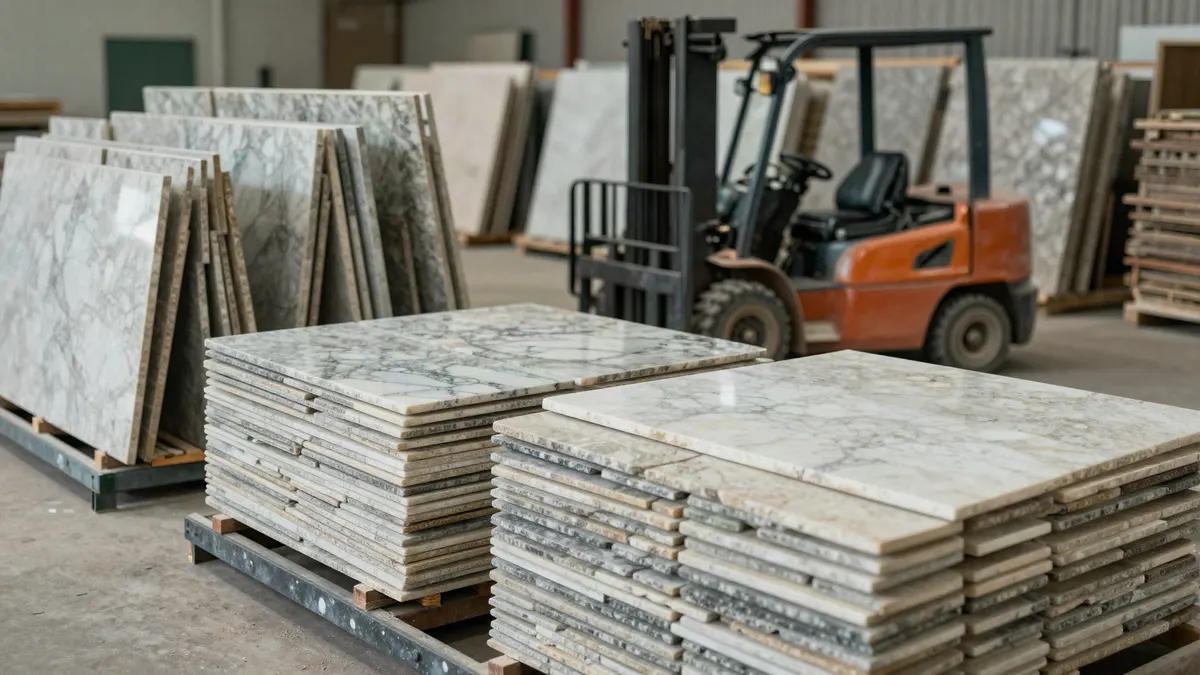
Chapter 68 covers stone, plaster, cement, asbestos and similar materials. Global imports reached USD 38.6 billion in 2025, with the United States leading at USD 9.6 billion. Spain exported USD 1 billion, ranking 15th worldwide. These products supply construction, infrastructure and industrial sectors.
Source: UN ComtradeData for 2025Verified on 20 September 2026
Fact sheet
- Code
- 68
- Sector
- Construction and Materials
Main importing markets
USD · 2025| Country | Imports (USD) |
|---|---|
| United States | 9,571,019,093 |
| Germany | 4,088,811,573 |
| United Kingdom | 2,541,125,980 |
| France | 2,387,120,562 |
| Canada | 2,019,759,688 |
| Italy | 1,859,455,701 |
| China | 1,850,500,474 |
| Netherlands | 1,665,559,226 |
| South Korea | 1,293,849,414 |
| India | 1,134,398,228 |
| Japan | 1,102,518,021 |
| Poland | 1,100,443,094 |
| Singapore | 1,097,167,972 |
| Switzerland | 1,092,586,962 |
| Spain | 1,002,096,456 |
Imports declared by each country from the world. Countries report with a delay: the period is the latest with consolidated data.
Source: UN ComtradeData for 2025Verified on 27 September 2026
Headings in this chapter
- Stone; setts, curbstones and flagstones, of natural stone (except slate)Heading 6801
- Monumental or building stone, worked (except slate) and articles thereof (not of heading no. 6801) mosaic cubes etc., of natural stone including slate; artificially coloured granules of natural stoneHeading 6802
- Slate, worked; and articles of slate or of agglomerated slateHeading 6803
- Millstones, grindstones, grinding wheels, etc without frameworks, for grinding, sharpening, polishing, etc and parts thereof, natural stone, agglomerated natural or artificial abrasives or of ceramicsHeading 6804
- Abrasive powder or grain; natural or artificial, on a base of textile material, of paper, paperboard or of other material, whether or not cut to shape or sewn or otherwise made upHeading 6805
- Slag, rock wool and similar mineral wools; exfoliated vermiculite, expanded clays, foamed slag, mixtures and articles of heat, sound insulating or sound-absorbing mineral materialsHeading 6806
- Asphalt or similar material; articles (e.g. petroleum bitumen or coal tar pitch)Heading 6807
- Panels, boards, tiles, blocks and the like; of vegetable fibre, of straw, shavings, chips, particles, sawdust or other waste, of wood, agglomerated with cement, plaster or other mineral bindersHeading 6808
- Plaster or compositions based on plaster; articles thereofHeading 6809
- Cement, concrete or artificial stone; whether or not reinforced, articles thereofHeading 6810
- Asbestos-cement, of cellulose fibre-cement or the likeHeading 6811
- Fabricated asbestos fibres; mixtures with a basis of asbestos or of asbestos and magnesium carbonate; articles of such mixtures or of asbestos (e.g. thread, woven fabric, clothing, footwear), whether or not reinforced, not goods of heading 6811 or 6813Heading 6812
- Friction material and articles thereof (e.g. sheets, rolls, strips, segments, discs, washers, pads) not mounted; for brakes, clutches or the like, with a basis of asbestos, other mineral substances, or celluloseHeading 6813
- Mica; worked, articles of, including agglomerated or reconstituted mica; whether or not on a support of paper, paperboard or other materialsHeading 6814
- Stone or other mineral substances; articles thereof (including carbon fibres, articles of carbon fibres and articles of peat), not elsewhere specified or includedHeading 6815
Trade fairs in this sector
- Mondial du Bâtiment (Batimat, Idéobain e Interclima)
- BAU
- Big 5 Global
- Cevisama
- Construmat – Feria Internacional de la Construcción
- Marmomac, la Fiera del Marmo e della Pietra Naturale
What you need to know to export from Spain
Chapter 68 groups 15 product headings, from natural stone and slate to cement, plaster and friction materials. Each heading has its own classification requirements, tariffs and market dynamics. The first step is to identify which heading covers your product: the list on this page shows the main ones and their numbers.
Spain ranked 15th in global exports of Chapter 68 products in 2025 with USD 1 billion imported worldwide. This means Spanish exporters compete in a mature market where quality, certification and compliance with destination country standards matter more than price alone.
Tariffs depend on the product subheading and the trade agreement in force between Spain and the buyer's country. Use Access2Markets to check the applicable rate for your specific product and destination. For EU buyers, tariffs are zero under common trade rules; for others, rates vary widely.
Construction materials face different compliance requirements by destination: building standards, environmental certifications, safety markings and sometimes country-of-origin labelling. Ask your buyer or the customs authority in the target country what applies to your product before you ship.
The United States, Germany and the United Kingdom are the largest markets for these products. Check if your buyer is already established in one of these markets, as it tells you about their experience with tariffs, lead times and documentation requirements.
Frequently asked questions
How do I find out which heading my product belongs to?
Each of the 15 headings in Chapter 68 has a name and number. Read the list on this page: if your product matches one of them, that is your heading. If you are still unsure, the product description and the criteria in the official HS Notes for Chapter 68 will clarify it. Your customs broker can confirm this for you before you ship.
Do I need certification to export stone or cement?
That depends on the product and the destination country. Building materials often require compliance with local standards: the EU has its own (marked CE), the United States has ASTM standards, and other countries have their own. Ask your buyer what standards they expect or check the regulations of the country you are exporting to. Your industry association or a compliance consultant can advise you on the specific requirements for your product.
What documents do I need to export these products?
The standard export documents are the commercial invoice, packing list, bill of lading or airway bill, and certificate of origin. Some buyers or destinations may also require certificates of compliance, test reports, or environmental declarations. Check with your buyer and the Spanish customs authority (Agencia Tributaria) or your trade association for sector-specific requirements.
Which countries should I focus on?
The United States imported USD 9.6 billion of Chapter 68 products in 2025, Germany USD 4.1 billion and the United Kingdom USD 2.5 billion. These are the largest markets. However, your choice also depends on your product type, your production capacity and whether you already have contacts there. Research the specific demand for your product in each market, not just the overall market size.
Bring this analysis to your product
Create your free account: Exporta.ai reads your website, detects your HS code and tells you which markets to export to, with official data.