
Salt; sulphur; earths, stone; plastering… (chapter 25): which countries import it
Chapter 25 groups raw materials and processed minerals for construction: salt, stone, cement, lime, gypsum and industrial earths. Global imports exceed…
Published on 27 September 2026Updated on 27 September 2026
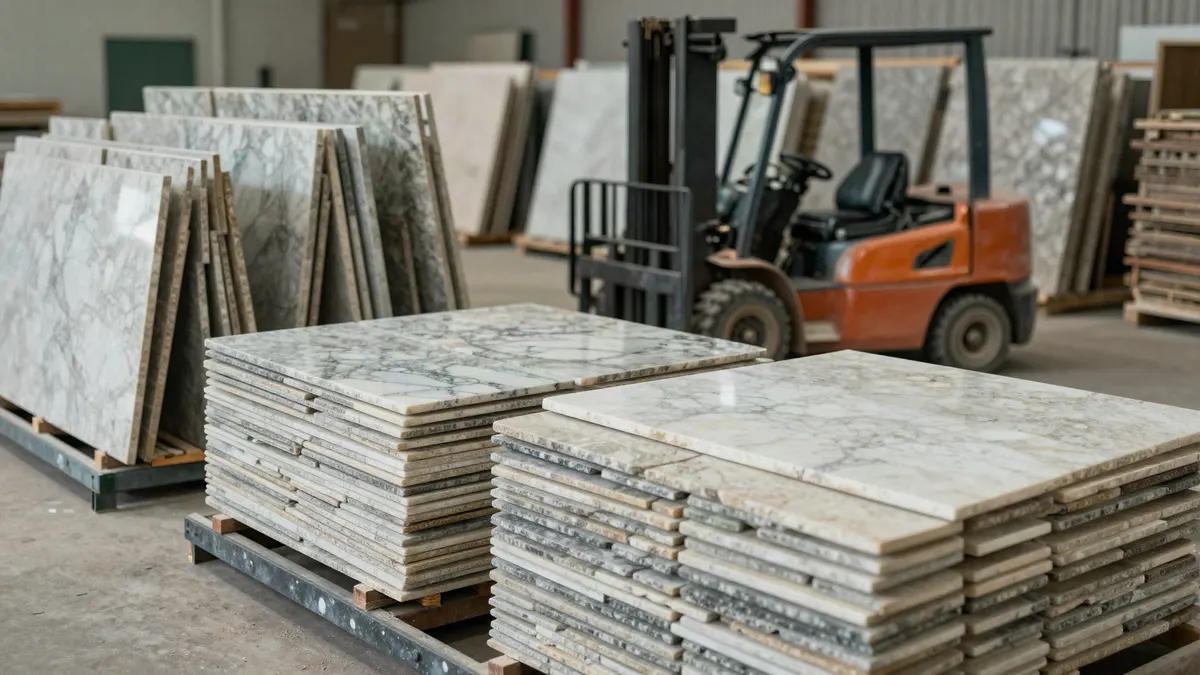
Chapter 25 groups raw materials and processed minerals for construction: salt, stone, cement, lime, gypsum and industrial earths. Global imports exceed 60 billion USD annually, with China, the US and India as top buyers. Spanish exporters compete in processed stone, cement and specialty minerals with access to EU quality standards.
Fact sheet
- Code
- 25
- Sector
- Construction and Materials
Main importing markets
USD · 2024| Country | Imports (USD) |
|---|---|
| China | 11,952,405,087 |
| United States | 6,055,397,808 |
| India | 5,192,575,017 |
| Morocco | 3,398,608,479 |
| Indonesia | 2,679,214,599 |
| Germany | 2,379,075,381 |
| Italy | 2,131,513,413 |
| Netherlands | 2,051,385,824 |
| France | 1,556,378,865 |
| Japan | 1,554,268,650 |
| United Kingdom | 1,465,125,683 |
| Belgium | 1,399,207,085 |
| Brazil | 1,358,410,544 |
| Singapore | 1,109,551,180 |
| Canada | 1,087,775,181 |
Imports declared by each country from the world. Countries report with a delay: the period is the latest with consolidated data.
Source: UN ComtradeData for 2024Verified on 27 September 2026
Headings in this chapter
- Salt (including table salt and denatured salt); pure sodium chloride whether or not in aqueous solution; sea waterHeading 2501
- Iron pyrites; unroastedHeading 2502
- Sulphur of all kinds; other than sublimed, precipitated and colloidal sulphurHeading 2503
- Graphite; naturalHeading 2504
- Sands of all kinds; natural, whether or not coloured, other than metal-bearing sands of chapter 26Heading 2505
- Quartz; (other than natural sands), quartzite, whether or not roughly trimmed or merely cut, by sawing or otherwise, into blocks or slabs of a rectangular (including square) shapeHeading 2506
- Kaolin and other kaolinic clays; whether or not calcinedHeading 2507
- Clays; (not including expanded clays of heading no. 6806), andalusite kyanite and sillimanite, whether or not calcined; mullite; chamotte or dinas earthHeading 2508
- ChalkHeading 2509
- Natural calcium phosphates; natural aluminium calcium phosphates and phosphatic chalkHeading 2510
- Natural barium sulphate (barytes); natural barium carbonate, (witherite) whether or not calcined, other than barium oxide of heading no. 2816Heading 2511
- Siliceous fossil meals (e.g. kieselguhr, tripolite and diatomite) and similar siliceous earths; whether or not calcined, of an apparent specific gravity of 1 or lessHeading 2512
- Pumice stone; emery; natural corundum, natural garnet and other natural abrasives, whether or not heat treatedHeading 2513
- Slate, whether or not roughly trimmed or merely cut, by sawing or otherwise, into blocks or slabs of a rectangular (including square) shapeHeading 2514
- Marble, travertine, ecaussine and other calcareous stone; of an apparent specific gravity of less than 2.5, alabaster, whether cut by sawing etc, into blocks, slabs of a rectangular (square) shapeHeading 2515
- Granite, porphyry, basalt, sandstone, other monumental and building stone, whether or not roughly trimmed, cut, by sawing etc, into blocks or slabs of a rectangular (including square) shapeHeading 2516
- Pebbles, gravel, crushed stone for concrete aggregates for road or railway ballast, shingle or flint; macadam of slag, dross etc tarred granules, chippings, powder of stones of heading no. 2515 and 2516Heading 2517
- Dolomite, whether or not calcined or sintered, including dolomite roughly trimmed or merely cut, by sawing or otherwise, into blocks or slabs of a rectangular (including square) shapeHeading 2518
- Natural magnesium carbonate (magnesite); fused magnesia; dead-burned (sintered) magnesia, whether or not containing small quantities of other oxides added before sintering; magnesium oxide, pure or notHeading 2519
- Gypsum; anhydrite; plasters (consisting of calcined gypsum or calcium sulphate), coloured or not, with or without small quantities of accelerators or retardersHeading 2520
- Limestone flux; limestone and other calcareous stone, of a kind used for the manufacture of lime or cementHeading 2521
- Quicklime, slaked lime and hydraulic lime; other than calcium oxide and hydroxide of heading no. 2825Heading 2522
- Portland cement, aluminous cement (ciment fondu), slag cement, supersulphate cement and similar hydraulic cements, whether or not coloured or in the form of clinkersHeading 2523
- AsbestosHeading 2524
- Mica, including splittings; mica wasteHeading 2525
- Natural steatite; whether or not roughly trimmed or merely cut, by sawing or otherwise, into blocks or slabs of a rectangular (including square) shape; talcHeading 2526
- Natural cryolite; natural chiolite.Heading 2527
- Natural borates and concentrates thereof (whether or not calcined), but not including borates separated from natural brine; natural boric acid containing not more than 85 % of H3BO3 calculated on the dry weightHeading 2528
- Feldspar; leucite; nepheline and nepheline syenite; fluorsparHeading 2529
- Mineral substances not elsewhere specified or includedHeading 2530
Trade fairs in this sector
- Mondial du Bâtiment (Batimat, Idéobain e Interclima)
- BAU
- Big 5 Global
- Cevisama
- Construmat – Feria Internacional de la Construcción
- Marmomac, la Fiera del Marmo e della Pietra Naturale
What you need to know to export Chapter 25
Chapter 25 covers 31 headings grouped into three types: raw minerals (salt, sulphur, earths, stone), processed construction materials (cement, lime, gypsum) and specialty products (asbestos, mica, feldspar). Each heading has its own tariff and import rules in destination markets.
Questions about exporting Chapter 25
What is the difference between Chapter 25 and Chapter 26 minerals?
Chapter 25 covers non-metal minerals used in construction and industry (salt, stone, cement, lime). Chapter 26 covers metal-bearing minerals and ores (iron, copper, zinc). The two chapters have different tariffs and export rules. Confirm the correct classification with the buyer before trading.
Bring this analysis to your product
Create your free account: Exporta.ai reads your website, detects your HS code and tells you which markets to export to, with official data.