
Paper and paperboard; articles of paper… (chapter 48): which countries import it
Chapter 48 covers paper, paperboard and articles made from them: from newsprint and tissue to corrugated cardboard and labels. The US imports nearly USD…
Published on 14 September 2026Updated on 27 September 2026
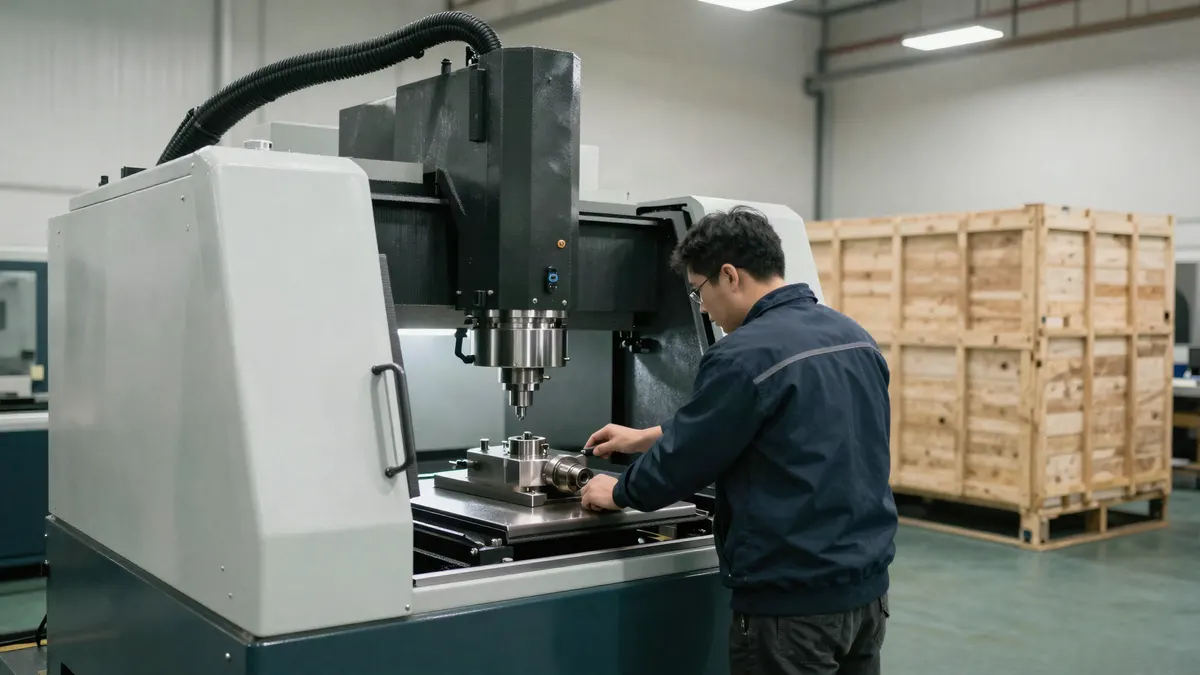
Chapter 48 covers paper, paperboard and articles made from them: from newsprint and tissue to corrugated cardboard and labels. The US imports nearly USD 20 billion annually, followed by Germany and France. Understanding tariffs, quality standards and buyer requirements is essential to compete in this mature, volume-driven market.
Fact sheet
- Code
- 48
- Sector
- Industry and Machinery
Main importing markets
USD · 2025| Country | Imports (USD) |
|---|---|
| United States | 19,938,006,207 |
| Germany | 14,859,779,116 |
| France | 9,644,884,669 |
| United Kingdom | 8,171,340,237 |
| Italy | 7,278,111,344 |
| Canada | 6,893,746,808 |
| Poland | 6,749,429,770 |
| China | 6,673,514,652 |
| Mexico | 6,559,383,804 |
| Netherlands | 6,552,935,126 |
| Spain | 5,076,048,381 |
| Belgium | 3,781,297,482 |
| India | 3,101,383,991 |
| Türkiye | 2,887,813,606 |
| Japan | 2,832,546,681 |
Imports declared by each country from the world. Countries report with a delay: the period is the latest with consolidated data.
Source: UN ComtradeData for 2025Verified on 27 September 2026
Headings in this chapter
- Newsprint, in rolls or sheetsHeading 4801
- Uncoated paper and paperboard, used for writing, printing or other graphics, non perforated punch-cards and punch tape paper, in rolls or rectangular sheets, of any size, other than paper of heading 4801 or 4803; hand-made paper and paperboardHeading 4802
- Tissue, towel, napkin stock or similar; for household or sanitary uses, cellulose wadding, webs of cellulose fibres, in rolls over 36cm in width or rectangular sheets with one side exceeding 36cm when unfoldedHeading 4803
- Uncoated kraft paper and paperboard, in rolls or sheets, other than that of heading no. 4802 or 4803Heading 4804
- Uncoated paper and paperboard n.e.c., in rolls or sheetsHeading 4805
- Vegetable parchment, greaseproof papers, tracing papers, glassine and other glazed transparent or translucent papers, in rolls or sheetsHeading 4806
- Composite paper and paperboard, (made by sticking layers together with an adhesive), not surface-coated or impregnated, whether or not internally reinforced, in rolls or sheetsHeading 4807
- Paper and paperboard, corrugated (with or without glued flat surface sheets), creped, crinkled, embossed or perforated, in rolls or sheets other than paper of the kind described in heading 4803Heading 4808
- Carbon paper, self copy paper, and other copying or transfer papers (including coated or impregnated paper for duplicator stencils or offset plates), whether or not printed, in rolls or sheetsHeading 4809
- Paper and paperboard, coated one or both sides with kaolin (china clay) or inorganic substances, with binder or not, no other coating, surface coloured or not, surface decorated or printed, in rolls or rectangular (including square) sheets, of any sizeHeading 4810
- Paper, paperboard, cellulose wadding and webs of cellulose fibres, coated, impregnated, covered, surface-coloured, decorated or printed, rolls or sheets, other than goods of heading no. 4803, 4809, or 4810Heading 4811
- Filter blocks, slabs and plates of paper pulpHeading 4812
- Cigarette paper, whether or not cut to size or in the form of booklets or tubesHeading 4813
- Wallpaper and similar wall coverings; window transparencies of paperHeading 4814
- Floor coverings on a base of paper or of paperboard, whether or not cut to size.Heading 4815
- Carbon paper, self-copy paper and other copying or transfer papers, (other than those of heading no. 4809), duplicator stencils and offset plates, of paper whether or not put up in boxesHeading 4816
- Envelopes, letter cards, plain postcards and correspondence cards, of paper, paperboard; boxes, pouches, wallets and writing compendiums, of paper or paperboard containing assortment of paper stationeryHeading 4817
- Toilet paper, width 36cm or less or cut to size/shape; handkerchiefs, tissues, towels, serviettes, bed sheets and similar household or hospital articles, apparel and clothing accessories of paper pulp, paper, cellulose wadding or webs of cellulose fibresHeading 4818
- Cartons, boxes, cases, bags and the like, of paper, paperboard, cellulose wadding or fibres; box files, letter trays and the like, of paper or paperboard, of a kind used in offices, shops or the likeHeading 4819
- Registers, account books, diaries and similar; albums for samples or collections, of paper or paperboardHeading 4820
- Paper or paperboard labels of all kinds, whether or not printedHeading 4821
- Bobbins, spools, cops and similar supports of paper pulp, paper or paperboard (whether or not perforated or hardened)Heading 4822
- Paper, paperboard, cellulose wadding and webs of cellulose fibres; cut to size or shape, articles of paper pulp, paper and paper-board, cellulose wadding or webs of cellulose fibres, n.e.c. in chapter 48Heading 4823
Trade fairs in this sector
- Advanced Factories
- bauma
- BIEMH – Bienal Internacional de Máquina‑Herramienta
- EMO (Exposition Mondiale de la Machine Outil)
- Hannover Messe
- interpack – PROCESSING & PACKAGING
What you need to know to export paper and paperboard
This chapter groups 23 different product categories, from basic newsprint to specialized papers for printing, tissue products, corrugated cardboard and converted articles like envelopes and cartons. The diversity means your export strategy depends entirely on which heading you target: a tissue exporter faces different buyers, certifications and logistics than a coated paper supplier.
Lead times are typically 4 to 8 weeks for standard products and longer for custom specifications. Working capital requirements are high: bulk orders require upfront commitment, and payment terms vary from 30 to 90 days depending on buyer size and relationship. Logistics costs matter: paper is heavy and low-value-to-weight, so proximity to your buyer or access to efficient sea freight routes affects your competitiveness.
Questions about exporting paper and paperboard
How do I know which of the 23 headings in Chapter 48 applies to my product?
The heading depends on the paper's coating, intended use, construction and dimensions. Newsprint is heading 4801; uncoated office paper is 4802; tissue is 4803; kraft paper is 4804. Coated papers fall under 4810 or 4811 depending on the coating type. Converted articles like boxes go to 4819, envelopes to 4817. Your supplier documentation should identify the harmonized code; if not, consult a customs broker or use the online TARIC tool to cross-reference your product specs.
What's the minimum order size buyers typically expect?
Minimum orders are usually one truckload (18–24 tonnes) or one container (20 or 40 ft, typically 15–25 tonnes depending on density and paper type). Some traders or distributors accept smaller volumes at a premium. For specialty or converted products (envelopes, boxes), minimums are lower—often 500–2,000 units. Always clarify with the buyer before quoting.
How do I find buyers for corrugated cardboard or tissue in export markets?
Corrugated cardboard and tissue are typically sold to converters, printers, packaging companies and retailers. Attend trade fairs like Interpack (packaging) or Advanced Factories to meet buyers and distributors. Use licensed B2B databases to search for importers by heading and country. Join industry associations in your market (paper councils, packaging federations) to access buyer networks. Direct outreach to food manufacturers, e-commerce fulfillment companies and retail chains is also effective if you have the capacity to meet their volume requirements.
Bring this analysis to your product
Create your free account: Exporta.ai reads your website, detects your HS code and tells you which markets to export to, with official data.