
Apparel and clothing accessories; not… (chapter 62): which countries import it
Chapter 62 covers woven garments and clothing accessories: coats, shirts, trousers, underwear, gloves, ties and similar items. The US, Germany and France…
Published on 27 September 2026Updated on 27 September 2026
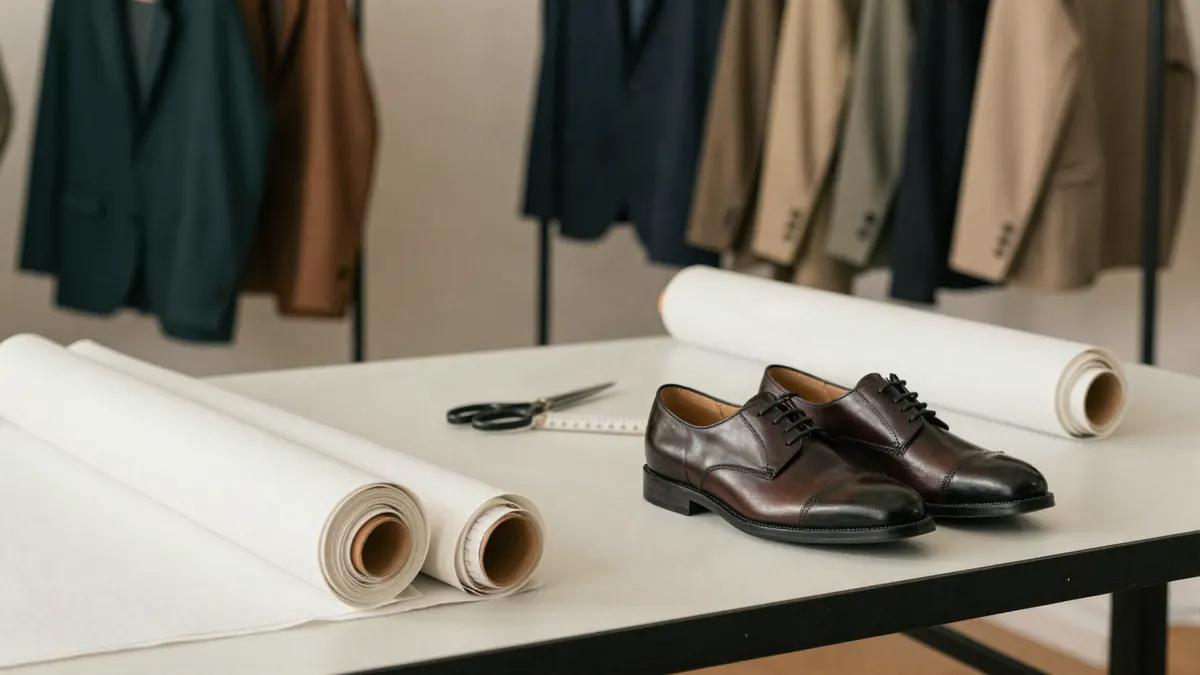
Chapter 62 covers woven garments and clothing accessories: coats, shirts, trousers, underwear, gloves, ties and similar items. The US, Germany and France are the largest importers. As a Spanish exporter, you compete in a mature market where tariff classification, material compliance and delivery terms determine your margins.
Fact sheet
- Code
- 62
- Sector
- Fashion and Textiles
Main importing markets
USD · 2025| Country | Imports (USD) |
|---|---|
| United States | 35,113,871,538 |
| Germany | 22,511,274,875 |
| France | 13,685,567,252 |
| Spain | 11,921,463,270 |
| Japan | 11,436,139,744 |
| Italy | 10,237,779,942 |
| Poland | 9,509,094,028 |
| United Kingdom | 9,365,928,407 |
| Netherlands | 8,164,031,381 |
| South Korea | 7,048,284,973 |
| China | 5,893,219,020 |
| Canada | 5,163,638,662 |
| Switzerland | 4,894,073,469 |
| Austria | 4,116,354,951 |
| Australia | 3,956,164,001 |
Imports declared by each country from the world. Countries report with a delay: the period is the latest with consolidated data.
Source: UN ComtradeData for 2025Verified on 27 September 2026
Headings in this chapter
- Overcoats, car-coats, capes, cloaks, anoraks (including ski-jackets), wind-cheaters, wind-jackets and similar articles, men's or boys', other than those of heading no. 6203 (not knitted or crocheted)Heading 6201
- Coats; women's or girls' overcoats, carcoats, capes, cloaks, anoraks (including ski-jackets), wind-cheaters, wind-jackets and similar articles, other than those of heading no. 6204 (not knitted or crocheted)Heading 6202
- Suits, ensembles, jackets, blazers, trousers, bib and brace overalls, breeches and shorts (other than swimwear); men's or boys' (not knitted or crocheted)Heading 6203
- Suits, ensembles, jackets, dresses, skirts, divided skirts, trousers, bib and brace overalls, breeches and shorts (other than swimwear); women's or girls' (not knitted or crocheted)Heading 6204
- Shirts; men's or boys' (not knitted or crocheted)Heading 6205
- Blouses, shirts and shirt-blouses; women's or girls' (not knitted or crocheted)Heading 6206
- Singlets and other vests, underpants, briefs, night-shirts, pyjamas, bathrobes, dressing gowns and similar articles; men's or boys' (not knitted or crocheted)Heading 6207
- Singlets and other vests, slips, petticoats, briefs, panties, nightdresses, pyjamas, negligees, bathrobes, dressing gowns and similar articles; women's or girls' (not knitted or crocheted)Heading 6208
- Garments and clothing accessories; babies' (not knitted or crocheted)Heading 6209
- Garments made up of fabrics of heading no. 5602, 5603, 5903, 5906 or 5907 (not knitted or crocheted)Heading 6210
- Track suits, swimwear and other garments (not knitted or crocheted)Heading 6211
- Brassieres, girdles, corsets, braces, suspenders, garters and similar articles and parts thereof; whether or not knitted or crochetedHeading 6212
- Handkerchiefs (not knitted or crocheted)Heading 6213
- Shawls, scarves, mufflers, mantillas, veils and the like (not knitted or crocheted)Heading 6214
- Ties, bow ties and cravats (not knitted or crocheted)Heading 6215
- Gloves, mittens and mitts (not knitted or crocheted)Heading 6216
- Clothing accessories n.e.c.; parts of garments or accessories other than those of heading no. 6212 (not knitted or crocheted)Heading 6217
Trade fairs in this sector
- LINEAPELLE
- MICAM Milano
- MOMAD, Salón Internacional de Moda, Calzado y Accesorios
- Pitti Immagine Uomo
- Première Vision Paris
- Techtextil
- Texworld Apparel Sourcing Paris
What you need to know
Chapter 62 groups non-knitted clothing and accessories by garment type and wearer: men's, women's, and children's categories run from heading 6201 to 6209, followed by specialist items like swimwear, brassieres, handkerchiefs, scarves and gloves. Each heading narrows down by fabric, construction or end use, so your tariff classification depends on the exact item, not on the chapter alone.
The United States imported 35 billion USD of goods in this chapter in 2025, followed by Germany with 22.5 billion USD and France with 13.7 billion USD. Spain itself was the fourth-largest importer at 11.9 billion USD, meaning a significant share of Spanish production goes to re-export or domestic consumption rather than export. You are competing against established suppliers in a price-sensitive market where lead times and reliability matter as much as cost.
Tariff access depends on your destination and the trade agreement in force. For US shipments, verify the tariff rate and rules of origin through the US International Trade Commission or your freight forwarder. For EU importers, use Access2Markets to check tariff suspension programmes or preferential rates available to Spanish exporters under bilateral or regional trade agreements. The rate you find is only valid for the heading and subheading you declare, so misclassification can be costly.
Material composition and country of origin labelling are regulated in most markets. Check the import requirements of your buyer's country: the US, Canada and EU all have mandatory labelling rules, and some buyers require organic or sustainable certifications. Your compliance team and customs broker should confirm these before production, not after shipment.
Frequently asked questions
How do I know the exact tariff code and rate for my garment?
Start with the 8-digit subheading: the heading structure depends on garment type (men's, women's, children's), and further digits narrow down by material and construction. Use the WCO's Harmonized System notes or ask your freight forwarder to classify before you quote to your buyer. Then check the applied rate in Access2Markets (for EU agreements) or your destination country's tariff database. The rate changes by destination and by trade agreement, so a shirt for the US pays a different tariff than one for the EU.
What does 'rules of origin' mean for Chapter 62?
Rules of origin determine whether your garment qualifies for preferential tariff rates under trade agreements. For example, if you export from Spain to the US under the WTO Most Favored Nation rate, the rule is usually that the garment must be cut and sewn in Spain (or another qualifying country). If you import fabric from outside the trade area and just assemble in Spain, you may not qualify for the lower rate. Check the rules for your destination: the EU-MERCOSUR or other bilateral agreements have specific requirements for Chapter 62 items.
Which markets should I target as a Spanish exporter?
Germany, France and Italy are the largest EU importers in this chapter, and they are geographically close to Spain with established logistics networks. The US is the world's largest importer but entry requires reliable supply, compliance with US labelling rules and often long-term contracts with retailers or distributors. Smaller markets like Poland, the UK and Austria are less saturated but require smaller order sizes and shorter lead times to compete.
Do I need special certifications to export apparel?
That depends on your buyer and destination. Most markets require country-of-origin labelling, material content labelling and compliance with fibre content regulations. Some buyers in the US and EU demand certifications for organic cotton or sustainable practices. Your buyer will specify requirements in the purchase order or pre-shipment inspection clause. Budget time to verify with your production team and obtain third-party lab reports if needed.
Bring this analysis to your product
Create your free account: Exporta.ai reads your website, detects your HS code and tells you which markets to export to, with official data.