
Incoterms 2020: which to choose in your first export
What Incoterms are, what each one decides (risk, cost, insurance and customs) and which one to use when you sell abroad for the first time.
Published on 15 September 2026Updated on 15 September 2026
 Luis Sanz FiguerasFounder de Exporta.ai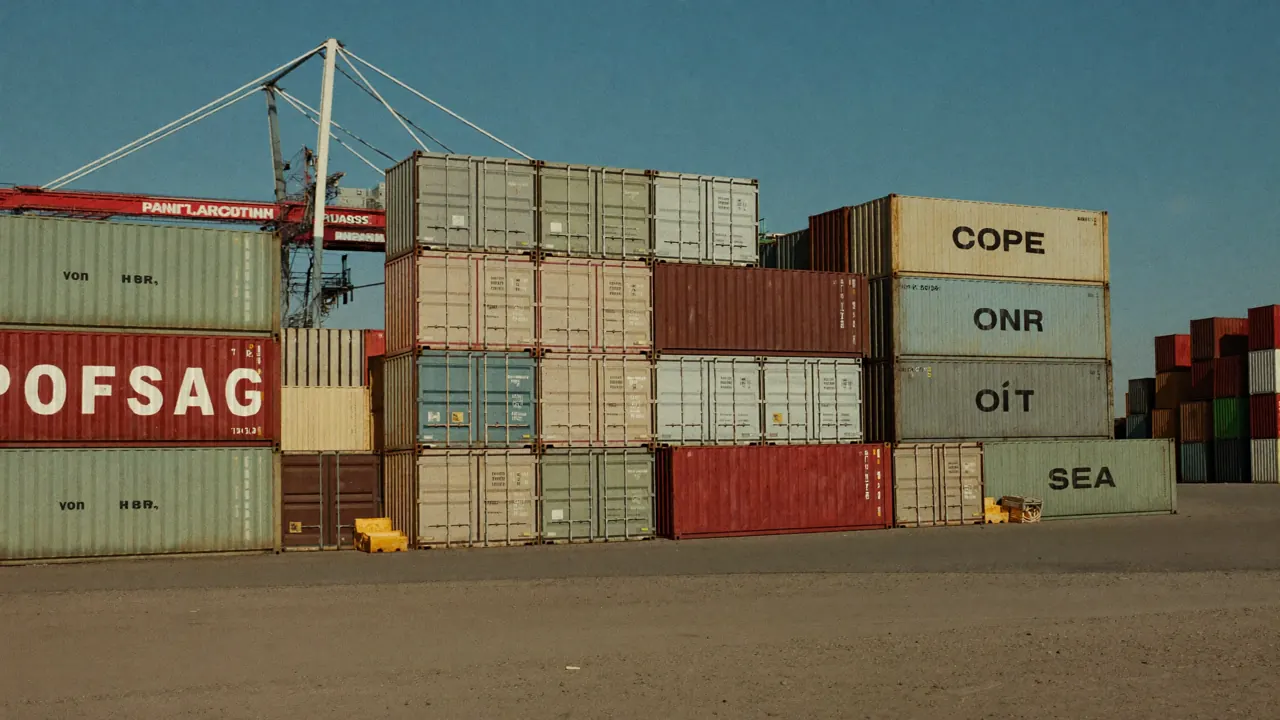
Incoterms are eleven rules from the International Chamber of Commerce that set out, in an international sale, who pays each leg of transport, when the risk passes from seller to buyer, and who clears customs. They do not regulate price or payment. For a first export, the most balanced rules are FCA and DAP; EXW leaves everything in the buyer's hands and DDP puts everything in the seller's.
What they decide and what they don't
An Incoterm divides three things between seller and buyer: the costs of transport and its procedures, the risk of loss or damage to the goods, and the customs obligations for export and import. What it does not decide is the price, the form of payment, ownership of the goods, or what happens if someone fails to comply: that goes in the contract.
The current version is Incoterms 2020, published by the International Chamber of Commerce in September 2019 and in force since 1 January 2020. It has eleven rules: seven apply to any mode of transport (EXW, FCA, CPT, CIP, DAP, DPU and DDP) and four apply only to maritime or inland waterway transport (FAS, FOB, CFR and CIF).
The most visible change from 2010 was replacing DAT with DPU (delivered at place unloaded), which no longer requires the delivery point to be a terminal.
Source: Cámara de Comercio Internacional (ICC), Incoterms 2020Data for 2020
The common mistake: EXW for convenience
EXW ('ex works') seems like the easiest option for someone starting out: the buyer picks up at your warehouse and takes care of everything. In practice, it leaves export clearance in the hands of the buyer, who often cannot do it in your country, and leaves you without proof that the goods left the European Union, which is what you need to justify the VAT exemption on the sale.
That is why the ICC itself recommends FCA when the seller wants to deliver at origin: you clear the export, hand over to the transport provider designated by the buyer, and the risk passes at that moment. It is the same effort as EXW with customs properly resolved.
Source: Cámara de Comercio Internacional (ICC), Incoterms 2020Data for 2020
Which to start with
If the buyer has a freight forwarder and import experience, FCA at your warehouse or at the port or airport of departure is the most balanced rule: each party controls the part of the journey they know.
If you want to sell 'delivered at their door' to win the deal, DAP makes you responsible for transport to the destination, but leaves import clearance and its taxes to the buyer. DDP adds that too, and only makes sense if you know the destination customs as well as your own.
For full container loads by sea, FOB and CIF are still the most common in many sectors, but the ICC recalls that they are designed for bulk or conventional cargo: when goods travel in a container and are handed to the transport provider before boarding, the rule that reflects what actually happens is FCA or CIP.
Source: Cámara de Comercio Internacional (ICC), Incoterms 2020Data for 2020
How to write it in your quote
An Incoterm only means something with three things alongside it: the rule, the exact place of delivery, and the version. 'FCA, Polígono Riu Clar, Tarragona, Incoterms 2020' says where your responsibility ends and when. 'FCA' on its own forces you to discuss it when there is already a problem.
The more precise the location, the fewer disputes: the warehouse, the terminal, the dock. And the Incoterm you put in the quote must be the same as appears on the invoice, packing list, and contract.
Frequently asked questions
Are Incoterms mandatory?
No. They are private rules of the International Chamber of Commerce that are incorporated into the contract when both parties name them. Without naming them, the division of costs and risks is decided by the law applicable to the contract, which is usually much less clear.
Can I still use Incoterms 2010?
Yes, if the contract says so expressly ('FOB Valencia, Incoterms 2010'). The ICC does not retire earlier versions, but mixing versions without stating so generates disputes: it is better to always cite 2020.
Which Incoterm includes insurance?
Only two oblige the seller to arrange insurance in the buyer's favour: CIP (any transport) and CIF (maritime). In Incoterms 2020, CIP requires broad coverage (Institute of London Underwriters clauses A) and CIF requires minimum coverage (clauses C). In the rest, each party insures what it wants for its leg.
Does the Incoterm decide who pays the tariff or VAT?
Import tariff and VAT are paid by whoever clears the import: the buyer in all rules except DDP, where the seller assumes them. That is why DDP requires knowing the tax system of the destination country before quoting a price.
Calculate which markets fit you before you choose how to deliver
Exporta.ai tells you which countries to export to with official trade data and what you need to enter. Start free.