

The week that decides
Between order confirmation and the truck leaving there is a week in which almost everything can still be fixed by email, and after which it cannot. The incidents you pay for — inspections, demurrage, returned goods — could nearly always have been avoided with a five-minute check in those days.
This is what has to be closed, grouped by who you close it with. It is not a list of good practices: it is the list of things that stop the shipment if they are missing.
With your customer
Everything that depends on them has to be confirmed in writing, not assumed.
- The advance payment has cleared and the money is in the account, not “sent”
- They have confirmed the exact delivery address and who receives, with a phone number
- I know who is named as importer at destination and that they are entitled to be
- They have told me whether any extra document is needed: health certificate, legalisation, lab analysis
- They know which language the labelling has to be in and have confirmed it in writing
- If there is a letter of credit, I have the text and I can comply with it exactly as written
With your freight forwarder
A freight quote is not a booking. Until there is a booking number, there is no slot.
- There is a confirmed booking with a number, vessel or flight and departure date
- I know the warehouse cut-off and the documentation cut-off
- The Incoterm I gave them is the same one that is on the invoice
- I know whether freight is prepaid or collect and it matches what was agreed
- They have confirmed which documents they need and in what format
- We have agreed that they will send me the customs exit confirmation
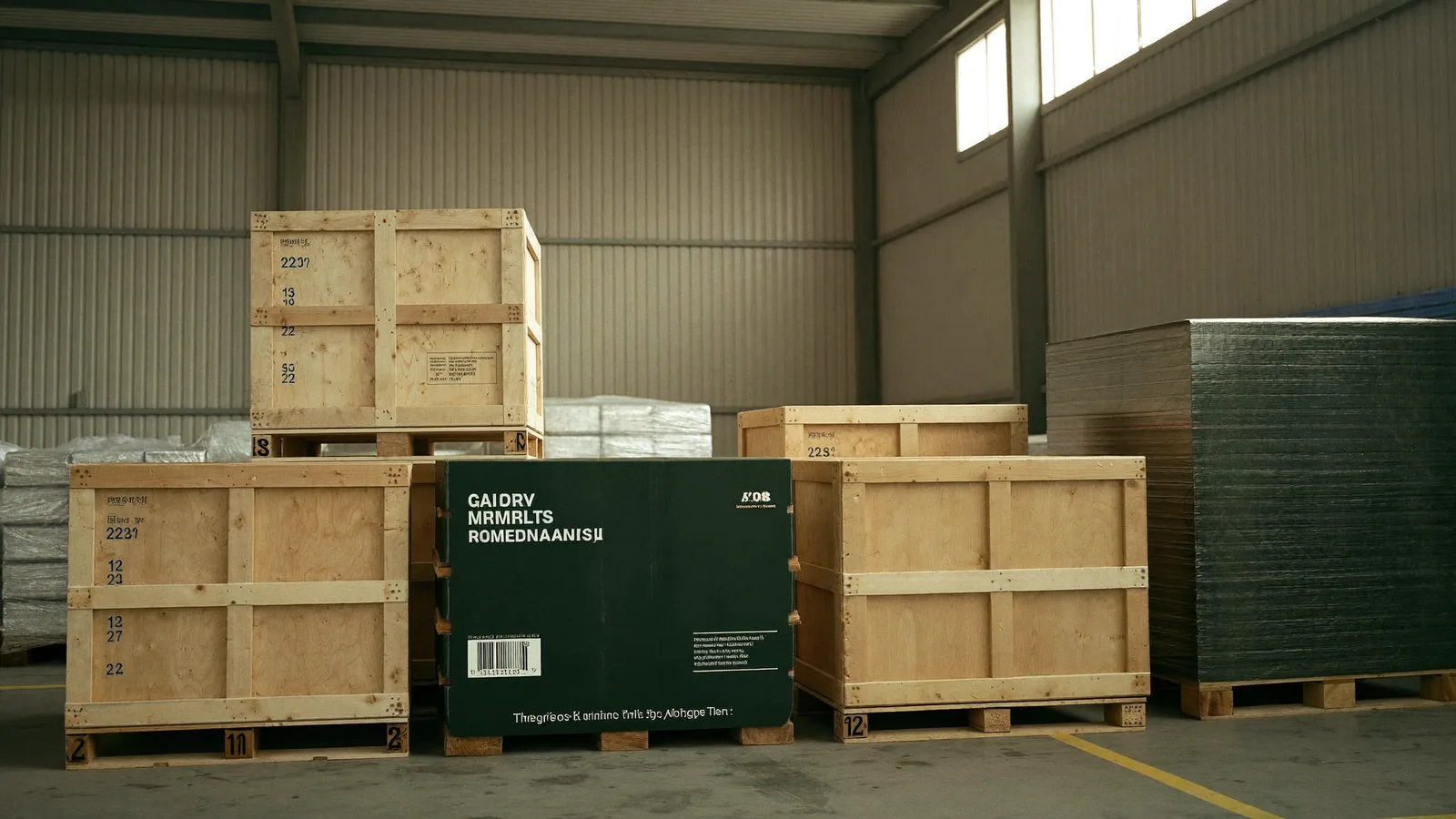
In your warehouse
What goes out of the door has to be exactly what the papers say.
- Packages are numbered and physically marked, not only on the list
- I weighed the gross weight, I did not estimate it
- Wooden packaging carries a visible ISPM-15 stamp
- The product labelling is the one for the destination country
- A copy of the packing list travels inside the shipment
- I photographed the load and the seal before closing
The documents, and who issues them
No two of these are issued by the same person, which is why they have to be requested with different lead times.
| Document | Who issues it | When to ask for it |
|---|---|---|
| Commercial invoice | You | When the order is confirmed |
| Packing list | You | When the load is being prepared |
| Transport document | The carrier or shipping line | At booking; the draft, before loading |
| Proof of origin | You (statement on origin) or the chamber of commerce | A week ahead: the chamber has its own lead times |
| Health or phytosanitary certificate | The competent authority | Two or three weeks ahead, depending on the destination |
| Cargo insurance | Your broker or the forwarder | Before the goods leave the warehouse |
| Export declaration | The customs broker | With the documents complete, before departure |
What gets forgotten most
- Loading with the advance payment “on its way”An international transfer can take days and can fail to arrive. Until the money is in the account, the goods do not leave the warehouse.
- Asking for proof of origin the day beforeIf a chamber of commerce issues it, it has its own deadlines and opening hours. Without it, your customer pays full duty and will come back to you for it.
- Not confirming who the importer at destination isThere are countries where the importer must be registered in advance. If your customer is not, the container arrives and cannot enter.
- Giving the weight from memoryA mismatch between declared and actual weight is the most common cause of physical inspection, and that inspection is paid for by whoever has the goods sitting still.