

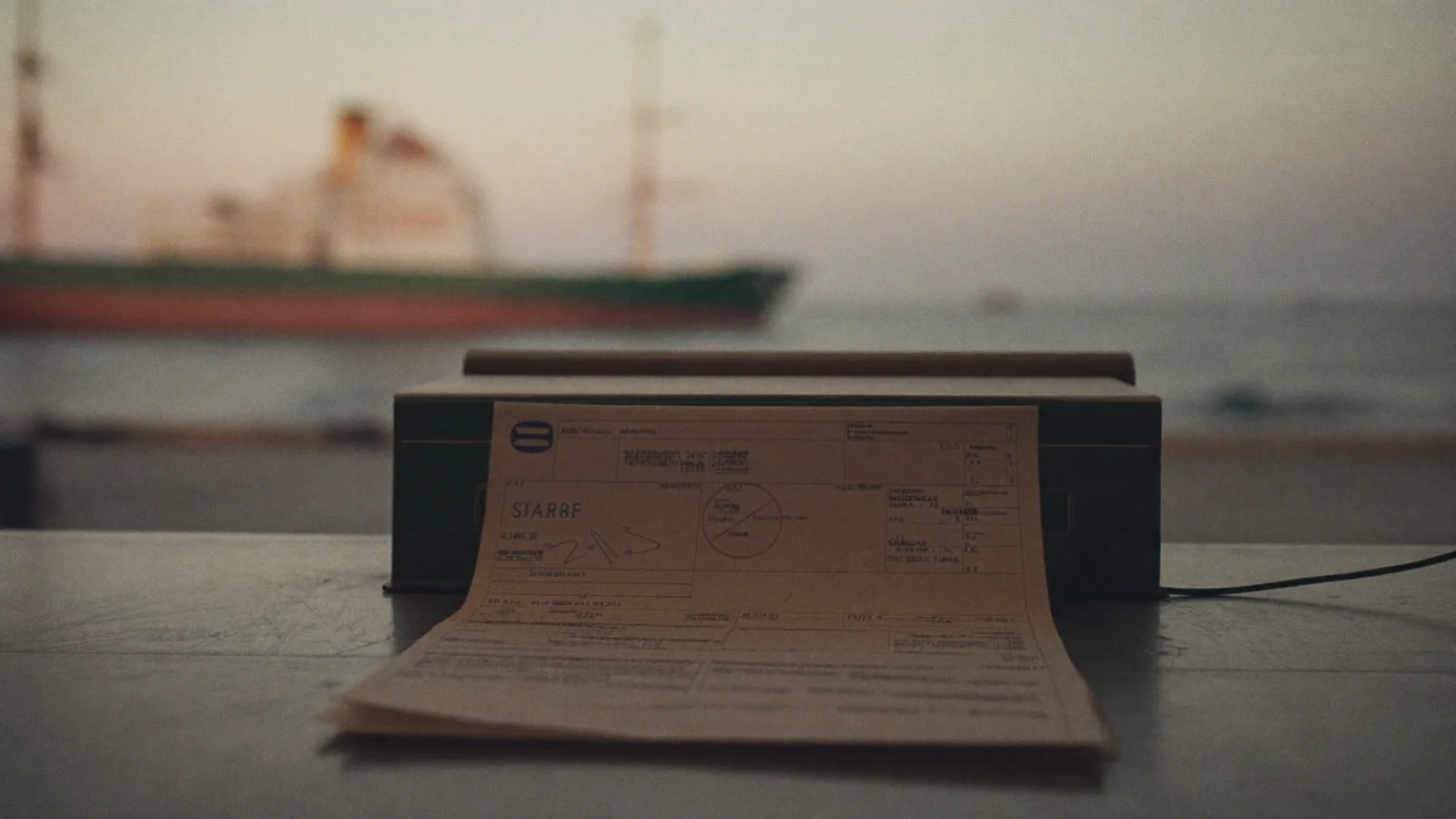
Three documents in one
The bill of lading — B/L — does three things at once, and confusing them is where the trouble comes from.
It is a receipt: the carrier acknowledges it received those goods, in that condition and in that quantity. It is a contract of carriage: its terms, usually on the reverse, govern the relationship between shipper and carrier. And when it is issued “to order”, it is a document of title: whoever holds the original has the right to collect the goods. That is the difference between an administrative piece of paper and a document worth whatever the cargo is worth.
That third role is what makes payment against documents possible. If the original is at your bank, your customer cannot collect the container until they pay. It is the mechanism that turns a shipment into a security.
Negotiable, straight or telex release
The first question about a B/L is not what it says, it is what type it is.
| Type | How it is issued | Who can collect | When it is used |
|---|---|---|---|
| To order (negotiable) | “To order” or “to order of [bank]” | Whoever presents an endorsed original | When you collect against documents or there is a letter of credit |
| Straight | In the name of a specific consignee | Only that consignee, on proof of identity | When you have already been paid, or there is trust |
| Telex release | Issued and “released” electronically | The consignee, with no paper original | When you have been paid and do not want the cargo waiting on a courier |
| Sea waybill | Non-negotiable by design | The named consignee | Recurring traffic with a trusted customer |
A telex release and a sea waybill are no security for payment: the goods are handed over without presenting paper. Do not issue them if you are still owed money.
Box by box
The names vary between carriers, but the content is always the same. These are the ones to check before signing.
- Shipper
- Whoever hands the goods to the carrier. Normally you, the exporter.Southern Oils Ltd, Seville, Spain
- Consignee
- Who it goes to. Everything is decided here: a specific name makes it straight, “to order” makes it negotiable.TO ORDER OF BANCO SANTANDER SA
- Notify party
- Who the carrier notifies when the vessel arrives. Usually the buyer or their agent, and it grants no right over the cargo.Nordic Foods AB, Stockholm (+46 8 123 456)
- Vessel and voyage
- Ship and voyage number. It is what lets you track the shipment and check the real dates.MSC Bettina / V. 438W
- Port of loading and port of discharge
- Loading and discharge ports. If there is transhipment, the B/L may also name the final place of delivery.Valencia, ES → Gothenburg, SE
- Marks and numbers
- The marks on the packages and, for a full container, the container and seal numbers.MSCU 123456-7 / seal ES0099431
- Description of goods
- The description, declared by you. The carrier copies it and does not answer for it: hence the usual “said to contain”.8 pallets — Olive oil, extra virgin, bottled
- Gross weight and measurement
- Gross weight and volume. They have to be the same as on the packing list, with no different rounding.3,912 kg — 11.14 m³
- Freight prepaid or collect
- Who pays the freight. The Incoterm determines it: prepaid under CPT, CIF or DAP; collect under FCA or FOB.FREIGHT PREPAID
- Number of originals
- How many originals were issued, usually three. Presenting one voids the others, so you have to know where all of them are.THREE (3) ORIGINALS
- Shipped on board and date
- The annotation evidencing the goods are loaded on board, with its date. It is what a letter of credit requires.SHIPPED ON BOARD 18 SEP 2026
Clean or claused
A B/L is clean when it carries no annotations about the condition of the goods or their packaging. If the port observes broken pallets, wet cases or dented drums, it notes it, and the document becomes claused (or foul).
This is not a formality. A letter of credit requires a clean B/L: with one annotation, the bank can refuse payment even if the goods arrive in perfect condition. And the insurer will read that note as evidence the damage came from origin.
That is why packaging is checked before handing over to the port, not after receiving the document: once the annotation is written, removing it depends on negotiating with the carrier and it almost never works.
Mistakes that leave the cargo sitting
- A misspelled consigneeThe carrier releases against identity. One letter of difference between the B/L and the buyer’s company registration forces a corrected B/L, which costs money and days.
- Weight or package count differing from the packing listCustoms at destination compares the two documents. A difference opens an inspection, and in many ports the container starts accruing demurrage meanwhile.
- Issuing “to order” and sending all three originals to the buyerIt voids the security: whoever holds the originals holds the goods. If you collect against documents, the originals travel through the banking channel, not in the same envelope.
- Not checking the “shipped on board” dateIf it is later than the latest shipment date set by the letter of credit, the bank rejects the documents even if everything else is right.
- Accepting a B/L with annotations without saying anythingIt makes the document claused and the credit payment falls with it. The annotation is disputed when the draft arrives, not when the documents are presented.
Before accepting the draft
The carrier sends a draft B/L before issuing. That is the moment to correct; afterwards every change is charged.
- The consignee is spelled exactly as in the company register
- Weights and package counts match the packing list, figure for figure
- The Incoterm and the “freight prepaid/collect” correspond
- The description identifies the goods and fits the heading declared
- It states the number of originals issued and I know where each one goes
- If there is a letter of credit, it complies literally with what the credit asks for
- It carries no annotation about the condition of the goods